 | Personas |
Personas are dreamt-up examples of users with a simple “back story.” Ideally, you would have one for each user type. They are useful in creating a semi-concrete representation of your potential user so that you can communicate the value and potential of your product to anyone inside or outside your organization. They are especially valuable for your development team, allowing them to visualize the product and build with a heightened sense of purpose.
To Be Systematically used in communication when discussing product development. Talk about personas in the place of users so that the team is used to conjuring from memory the image and tagline for each. This reinforce the needs and expectations of such a user and guide their priorities as they develop each feature.
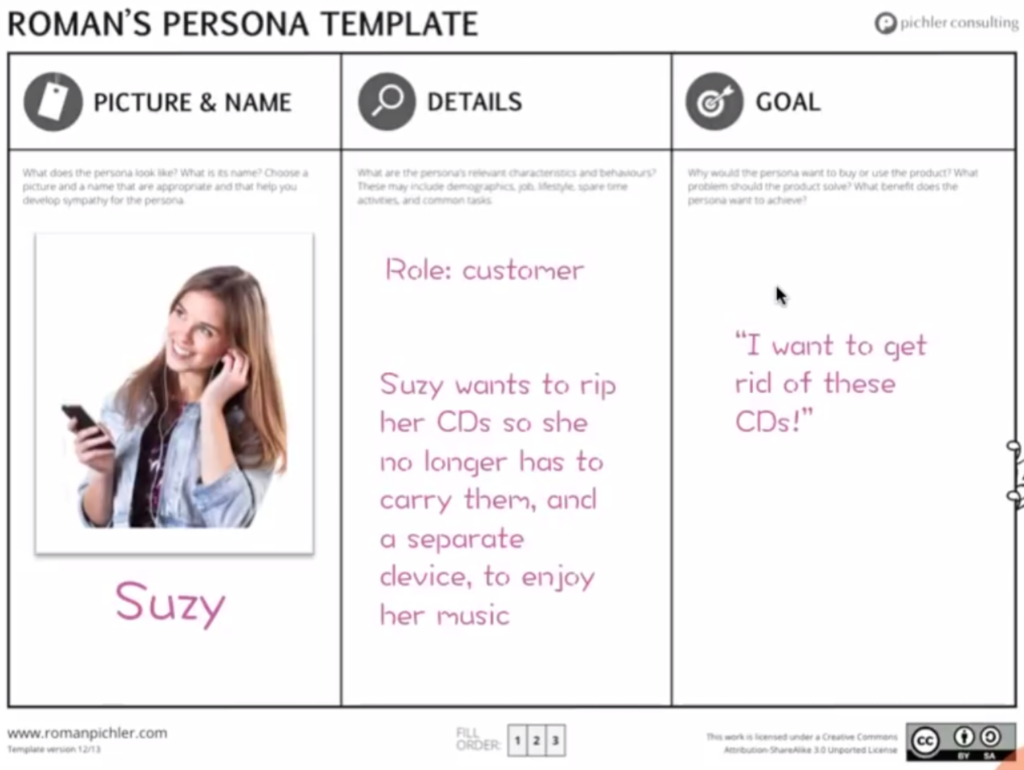
Personas should be…
Readily visible – posted in places where the right people will see them regularly
Properly developed
Each persona needs
The Basics
A Name – the name should be stereotypical of someone with the typical age and station of your intended user. If it is a young person at the bottom of a hierarchy, a first name is sufficient. If it is an older person, or someone with more authority, a title and last name (with no first name) might conjure up a stronger image
An Image – Use a drawing or stock image that creates a useful stereotype.
A tag line or catch phrase
how would your typical user express what they want to accomplish (i.e., overcoming the problem that your product is designed to tackle).
Relevant Details
To “properly develop” your personas, you should include details that clearly typify who your target users are (and aren’t). Be sure to only include truly relevant information, however. An over-developed persona will be less “iconic” and therefore less clear and memorable.
age
profession
gender (if the product caters more to one than the other)
For certain personas, more information is relevant:
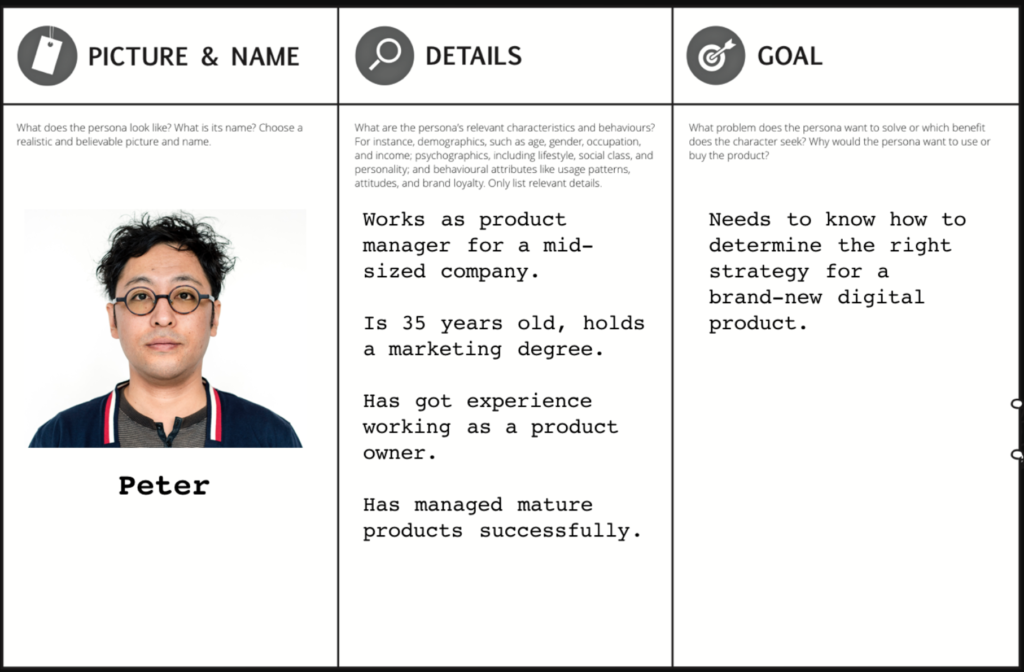
Selecting a Good Image
typical attire (what does the user normally wear, particularly when using the product)
typical accessories (Would the user likely be wearing sunglasses or headphones? Would they likely wear a tie or carry a briefcase?)
indicative action / posture (Would the person be standing or sitting when using the product? Would they be in an office chair working, or slouched in a sofa? Riding in or on a vehicle?)
indicative background (would the background of the picture give essential information about what the person is doing and why? If not, keep it blank or simple)
Important: Focus on key features, and leave off the non-essentials. An overdeveloped persona is confusing and counter-productive.